
This is coming out a few weeks after I planned on getting it out. However, I’m just about all settled in Chicago now, and will hopefully have a much more regular posting schedule.
In my last post, I talked about the roadblocks to reducing income inequality and making strides towards a more trusting society. I discussed how we could increase trust in our own lives.
In this post, I will talk about how institutions can aid in the transition to a more equitable and trusting society. I believe that there are two areas of focus where the most consequential changes can be made. The first area is research, without which we are just speculating on causes and effects. The second is governmental policy, which is an effective, if at times inefficient, tool.
Institutional Action Potential
In Biology Action Potential is considered “A short-term change in the electrical potential on the surface of a cell (e.g., a nerve cell or muscle cell) in response to stimulation, [which] then leads to the transmission of an electrical impulse (nerve impulse) that travels across the cell membrane.”
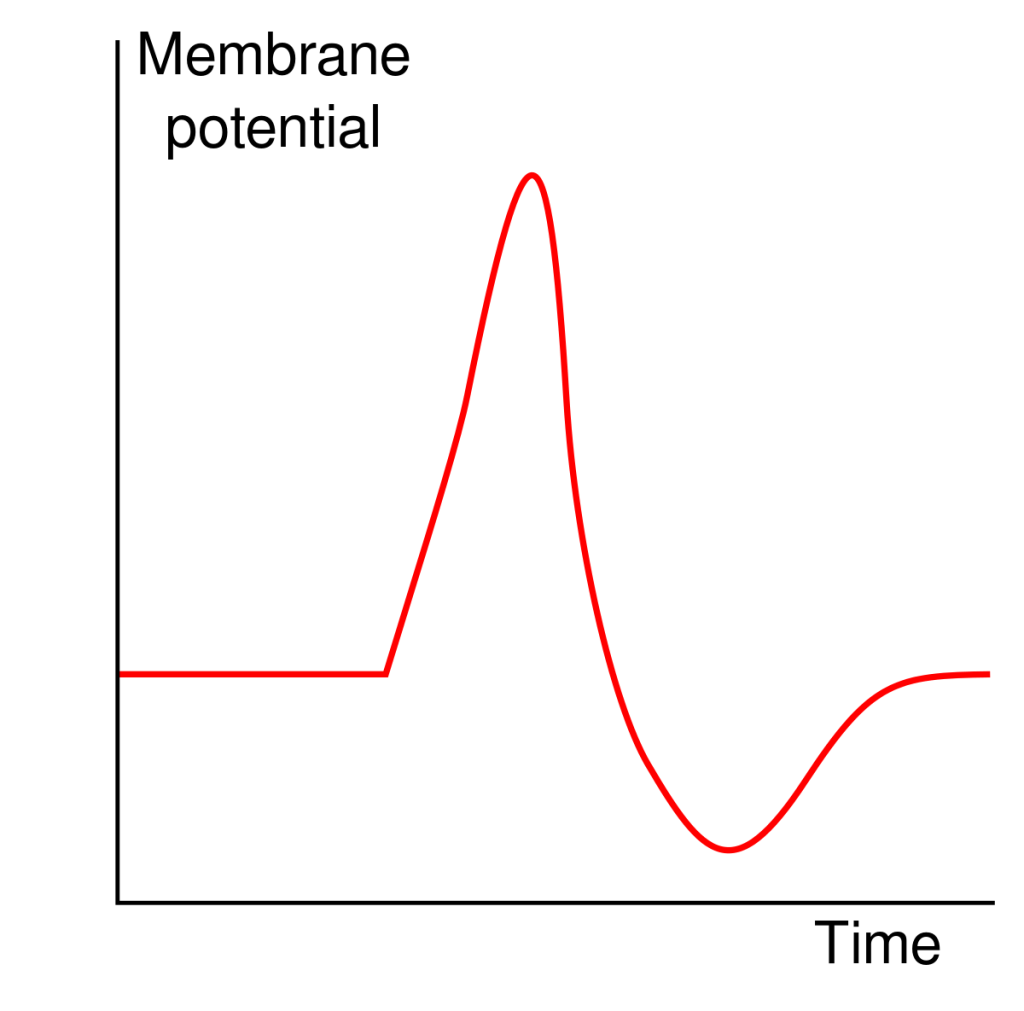
To affect real change, we need to reach a peak in this sort of institutional action potential. In other words, we need to hit a critical mass to get the ball rolling. Research and governmental action must increase in volume and effectiveness. This is so that people both understand the importance of a more equitable and trusting society and so that people see that this is truly achievable.
The first way to get the ball rolling is through research. In the first three Impacts of Interpersonal Relationships posts, I have cited a myriad of different research materials. These studies are great; however, they have not been tested, thoroughly, in the real world. To add even more validity to the ideas in these papers, they need to be applied in real situations. To do this, the researchers themselves need funding in the form of grants. These can come from many sources, including non-profits, the government, and private companies.
One thing that all of these sources have in common is that they respond to public pressure. So, if people lobby for more research to be placed in the area of trust and income inequality, then it is far more likely to happen. Beyond calling for more funding, you can, given that you have the means, donate to organizations that will help to fund this research. There are a number of great places to donate, both on the large and small scale. If you find you are interested in one of the studies cited in a previous post, then by all means donate to a particular department at a particular university. The important aspect of donating is that the money is clearly given to the research that we are trying to promote.

The next area that will have a strong impact on getting the ball rolling is government. As I mentioned in the introduction, this is a wildly inefficient tool, but it is a powerful tool, nonetheless. Beyond that, it can be very effective. First, we can take advantage of its ability to fund the research mentioned above. The next way that we can use the government is to find specific programs that can help produce more equitable and trusting situations.
CALL TO ACTION
In writing this post, I attempted to find new research to further many of the ideas discussed in my last three posts. I realized that it’s not there to be found yet… So, this post is a call to action because the groundwork has been laid by previous research. Now, more research needs to be done, and at the same time, people need to start pushing for change. People need to see, hopefully through this research, that we ought to be in a more trusting society. As the world is ever-changing, I want to move in the direction of a more, not less, trusting society.
The research has shown that the way to this society is by decreasing income inequality, increasing perceived fairness, and increasing healthier interpersonal relationships.
I will have another post coming out shortly with my next series of blog posts.
Quote Citation:
 Denali Keefe