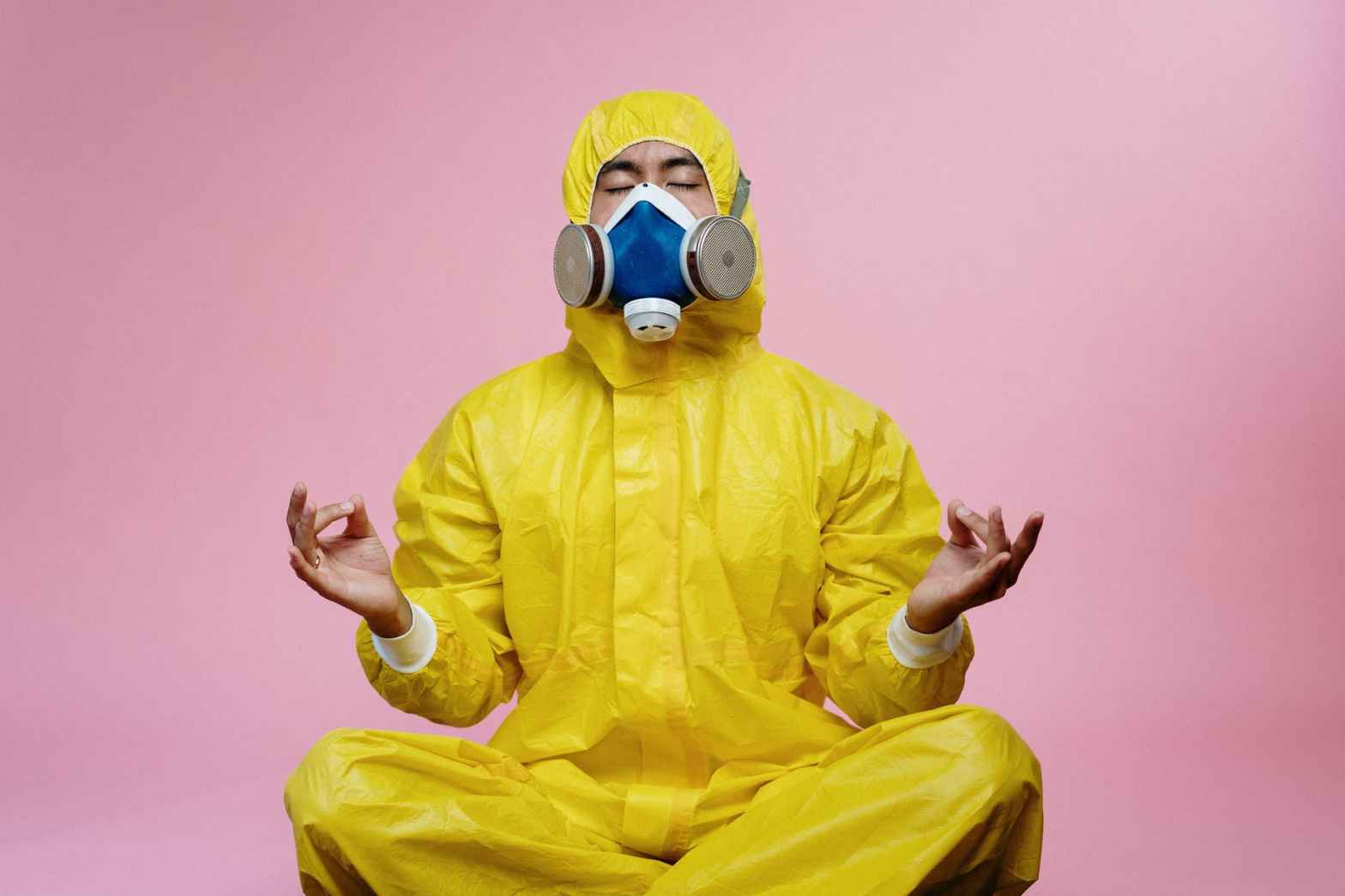
The next series of posts that I am going to be writing are going to cover the Invisible Pandemic. That is, the mental health crisis that this country is facing. The “First” pandemic of 2020, the COVID-19 pandemic wrought some real havoc on the country, with most estimates putting the US death toll over 1 million people. And whichever way that one spins it, that’s too many people. Without many of the precautions that we took to curb the pandemic, there would have almost certainly been more casualties.
This other pandemic, the Invisible Pandemic, is a more artificial pandemic. It is the pandemic of mental illness that has spread just as quickly and effectively as COVID-19. The key difference is that it’s not viral, It’s a culmination of years of technology outpacing our human hardwiring.
We didn’t evolve to live in cities with computers designed to take our attention and hold it for as long as possible. We didn’t evolve to live in a world where we went from bed to an 8+ hour shift, then out to a bar with only two days reprieve on the weekends (if we’re lucky). We didn’t evolve to have to regulate our own coping mechanisms (alcohol, cannabis, TV, browsing, social media, etc., etc.). But the nail in the coffin for so many people is that we didn’t evolve to isolate and live without seeing other people for such a long period of time.
In my last post, I talked about how many feedback loops for sharing and building close relationships are highjacked by social media. This stems from the fact that evolution takes years and years to really take hold because it most often works by favoring sexual reproduction of the most “fit.” This happens over the spans of generations. Most of our technological advancements have occurred over the last 300 years (The First Industrial Revolution started in 1760). This means that we are less than 5 generations from the beginnings of modern manufacturing practices, let alone technology like computers.
So, if I may be so bold, my dear reader, why the fuck is it reasonable to “fit” into this current world?
With this question providing a bit of context, let’s look at the Invisible Pandemic. Regardless of all of the lives saved by staying home and isolating, there have been some major mental health consequences. These consequences come from two primary places. First, the fear of getting COVID-19, along with the constant barrage of media about the havoc that it was reeking was very detrimental to mental health. Second, the lack of a support network, and generalized societal anxiety was also very damaging to individuals’ mental health. This second point came to a head during COVID-19 and its isolation, but it has been building for years.
The first consequence has been analyzed in depth by others, with deep dives into doom scrolling and the fact that people who had higher levels of anxiety and depression were more likely to be hospitalized with COVID-19. I find the second consequence more interesting, as it has longer-term implications.
The lack of support network and generalized societal anxiety is still very much around and it still plays a huge role in our lives. This will impact the world going forward as it has had the most drastic impact on younger people. In an article written for the Journal of the American Medical Association (JAMA), they explain that “[increased] rates of substance use disorders and psychotic disorders occurred early and were sustained at levels higher than expected … The largest increases were noted for mood and anxiety disorders (74.7%), psychosis (73.2%), substance use (83.6%), social problems (64.6%), and neurodevelopmental disorders (69.8%).” (Benton et al.) The article is situated in the context of COVID-19 and the isolation that occurred. It goes to show that these increases in mental health issues during COVID-19 were not trivial and are not short-term.
This is not something that we can overlook anymore. While there are many parallels with the COVID-19 Pandemic, it’s important to note that these issues are coming from a deeper problem than COVID-19. In the next few posts, I will be diving into these different problems and some different ways to address them.
The next post will specifically focus on Generalized Anxiety Disorder and Major Depressive Disorder, and their relative upticks during and pre-COVID-19. I’ll also dive into the causes and some of the ways that we can combat them.
Citations
Benton, Njoroge, W. F. M., & Ng, W. Y. K. (2022). Sounding the Alarm for Children’s Mental Health During the COVID-19 Pandemic. JAMA Pediatrics, 176(4), e216295–e216295. https://doi.org/10.1001/jamapediatrics.2021.6295
Holman, Thompson, R. R., Garfin, D. R., & Silver, R. C. (2020). The unfolding COVID-19 pandemic: A probability-based, nationally representative study of mental health in the United States. Science Advances, 6(42). https://doi.org/10.1126/sciadv.abd5390
Monistrol-Mula, Félez-Nobrega, M., Domènech-Abella, J., Mortier, P., Cristóbal-Narváez, P., Vilagut Saiz, Gemma, 1975, Olaya, B., Ferrer, M., Gabarrell-Pascuet, A., Alonso Caballero, J., & Haro Abad, J. M. (2022). The impact of COVID-related perceived stress and social support on generalized anxiety and major depressive disorders: moderating effects of pre-pandemic mental disorders. https://doi.org/10.1186/s12991-022-00385-3
Oldham, Hitchins, A., & Nickels, M. W. (2021). Mental Health, COVID-19, and the Invisible Pandemic on the Horizon. Mayo Clinic Proceedings, 96(2), 287. https://doi.org/10.1016/j-mayocp.2020.11.001
 Denali Keefe
One thought on “The Invisible Pandemic (Part I)”