Featured

What COVID-19 has Taught us About Mental Health & 3 Simple but Common Stressors (#12)

The Invisible Pandemic (III)

Before I start this post, I would like to say, that this is not medical advice, I am not a doctor, and I don’t choose to play one on the internet. 

“An abnormal reaction to an abnormal situation is normal behavior.”

Victor Frankl, Man’s Search for Meaning

Photo by Jonathan Ball

It would be a laughable understatement to summarize COVID-19 as simply abnormal, but at the very least that is what it was … abnormal, weird, different.

But what did Coronavirus really do? 

In my last post, I discussed how the Coronavirus Pandemic caused an increase in both Major Depressive Disorder and Generalized Anxiety Disorder. This increase was then used as a benchmark for the less easily measured increases in general mental illness in the world.

University Students in Wuhan China provide a great case study. College is a cesspool for chaos as it is, but the addition of a once-in-a-lifetime event like the Coronavirus pandemic certainly didn’t help. A study by Hafstad et al., explains that mental health problems increased -statistically- significantly from 5.3% (2019) to 6.2% (June 2020). 

This jump was most likely caused by the introduction of the Coronavirus Pandemic and lockdowns as it was far and away the largest major event to occur in Wuhan China in that time period. The study explains that “[one] survey was conducted before the confinement and the other was conducted 15–17 days after the start of the confinement. Increases in negative affect and symptoms of anxiety and depression (p-values< 0.001) were observed after 2 weeks of confinement.”

Solutions:

Problems without solutions are a great way to fall deeper into this trap of anxiety and depression. I was listening to a podcast while driving and an idea struck me like a rock; Depression and anxiety are signs that we need to change something.

To be clear, “struck me like a rock” means that someone said it and it hit me. In my infinite wisdom, I just cannot seem to remember who or where.

When we have an infection, we don’t assume that something is innately wrong, we go to the doctor and take antibiotics. We know that there is a bacterium making us sick and that we need to help our bodies fight it off. Why, then, do we assume that there is something inately wrong with us when we are depressed or anxious? Is a sickness of the mind not still a sickness to be addressed?

The Question Remains, How?

There are a few steps, but the first step is the identification of the culprits. Bhattacharjee et al., describes the 5 most at risk groups for mental illness during the Coronavirus Pandemic: 

  1. “Elderly People”
  2. “Professionals,” specifically those with “immense mental stress regarding their job security.”
  3. “Healthcare Professionals”
  4. “Children and teenagers”
  5. “People with past and family psychiatric history”

These people have a lot in common, the first is that they are often more susceptible to fear of illness (for good reason), while the second is that they often are lacking in strong social networks. 

A few other risk factors for depression can be seen on the National Institute of Mental Illness’ website:

  • “Major life changes, trauma, or stress”
  • “Certain physical illnesses and medications”

Anxiety also has similar risk factors that can be seen on the Mayo Clinic’s website:

  • “Trauma”
  • “Stress due to an illness”
  • “Stress buildup”
  • “Personality”
  • “Drugs or alcohol”

Of course, there are more risk factors, but these paint a good picture. If we want to lower our chances of increased anxiety and depression in a life-changing event like Coronavirus, we need to remove as many risk factors as possible.

At this point, there are no guarantees, but we can definitely rig the game to our favor. The three factors that are most important and within our control are stress buildup, physical illness, and social network strength.

I cannot stress the challenge of controlling these things enough. Nevertheless, these things are within our control. And while I have in no way been successful at applying all of these things, I have read much of the research, and seen success while implementing it in my own life.
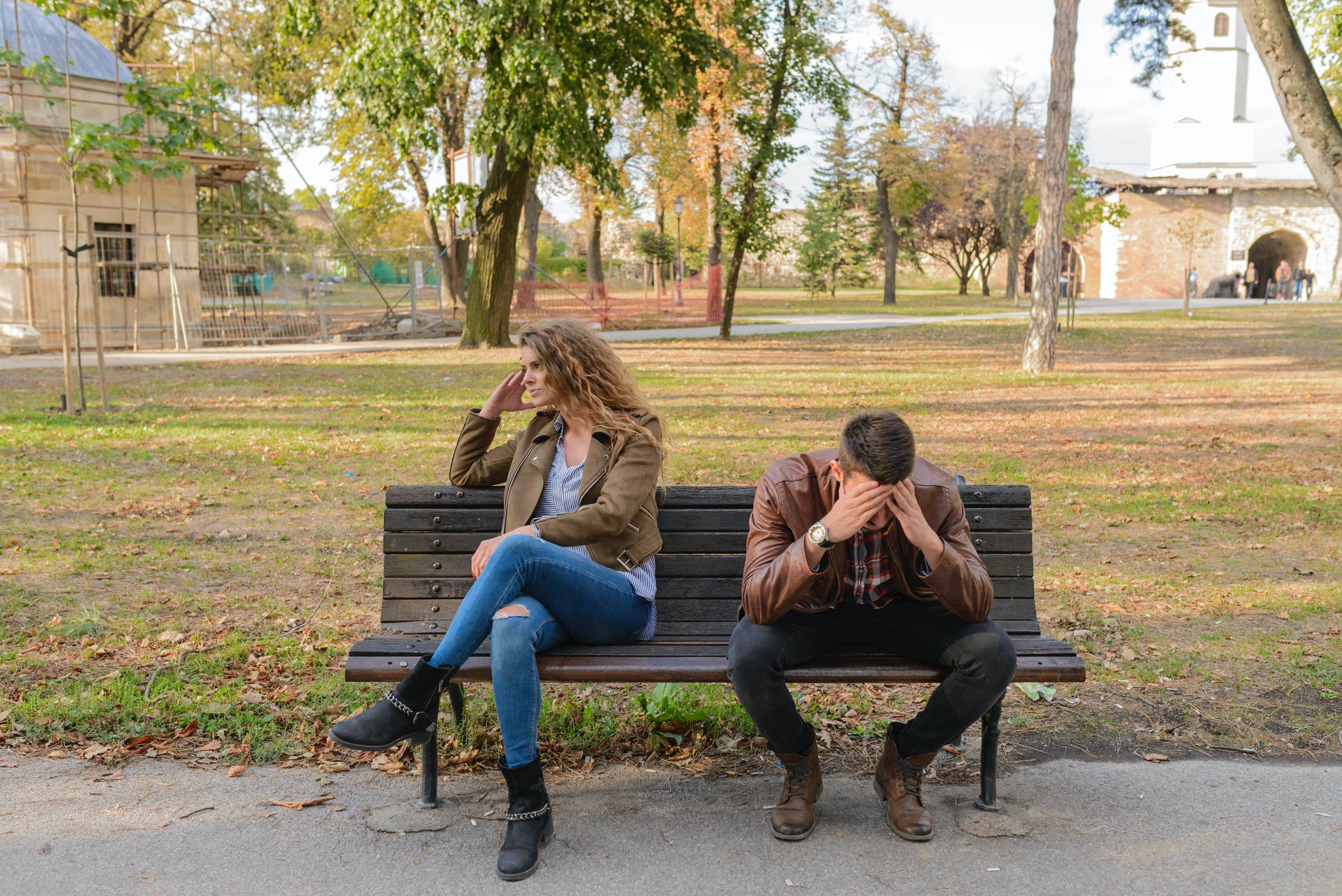
Photo by Vera Arsic on Pexels.com

These tips matter regardless of whether or not there is a pandemic raging across the globe. And like most things in life, these work far better as a preventative measure than a reactive one.

Stress Buildup

Stress is pervasive in our lives and is not something that we should strive to get rid of altogether. It can help to motivate us and get our butts moving in the right direction when we need it. (See eustress from tim.blog) It should not, however, be ever-present and always building. 

The first step to breaking out of the cycle of growing stress is to find where the stress is coming from. There are a number of sources, as well as blogs written on this topic, but I would wager that most people when they really think about it, know where the stress is coming from.  

Once the root cause is narrowed down, say your job, it’s easy. Quit your job.

… I wish. 

For some people, it can be that simple, but for most of us, if you could have quit then you would have quit. In place of this “easy” and often impractical fix, there are a number of much more attainable steps. 

If you are in a bad situation, be it at work or in a relationship, begin to work your way out. If it’s work, start applying to other jobs. If it’s a friendship, begin to expand your network through sports or other social events. Websites like https://www.meetup.com and https://www.reddit.com are a great way to find communities of like-minded people.

Another great way to reduce stress is through mediation. There are countless studies explaining the reasoning both psychiatrically and physiologically. A great conversation with Sam Harris (Neuroscience Ph.D.), Daniel Goleman (Ph.D.), and Richard J. Davidson (Psychology and Psychiatry Ph.D.) that goes into some of the science behind mediation can be found here.

Many people who pride themselves on valuing research consider meditation to be this weird hippy-dippy shit. I would challenge them to actually analyze the research and try it before solidifying their opinions. 

I have found that the Waking Up App (Sam Harris) is very good as an introductory course for me because it provides a very logic-based non-religious approach.  A hard, intensely focused workout routine can also provide similar benefits of decreased stress.

Physical Illness

When I moved to Chicago, earlier this summer, I stopped eating as healthily and exercising as much. I went from lots of fresh food and supplements to fast food and takeout because it was easier while moving. My workout routine also changed from working out at least one hour a day, six days a week, to two total hours a week. Following my brilliance, I caught a cold and it stuck with me for over two weeks.

After, a major move the last thing that I wanted to do was isolate. I was unsure of myself as it was, let alone being forced to stay in and not meet new people. It also doesn’t leave the best impression, when you work from home for the first two out of three weeks at a new, in-person, job.

It doesn’t matter if you get a bad cold, have terrible back pain, or catch COVID-19. All of these things can play a role in dampening your spirits and worrying you. Because of this, it’s important to maintain a strong immune system and a healthy body.

In Italy, a survey study analyzed the correlation of weekly activity to weekly mental health ratings. In this study, Maugeri et al. discovered that there was a strong positive correlation between minutes worked out per week and mental well-being. This data further suggested, that one of the many factors contributing to people’s poor mental health during the Coronavirus, was that average weekly activity dropped from 2429 min/week to 1577 min/week.

Social Network Strength

Maintaining valuable relationships is far more important than building new ones. I make it a point to try to keep in contact with my close friends, even after moving halfway across the country. I often fail, but having a conversation with a good friend, after months always leaves me rejuvenated. 

The highlight of my week since moving is often an hour-long conversation with an old friend. Just catching up and remembering that people share your values and experiences does wonders for making sure that you stay mentally healthy during both good and bad times.

A key reason that quarantining was so hard on so many people, was because it cut us off from our support systems. Having friends and family is a key part of how we cope and thrive. Thousands of banal platitudes aside, cherishing those close to you matters.  If you’re interested in learning more about the value of those close relationships, my entire series (Impacts of Interpersonal Relationships) can be found here.

Key Takeaways

Three steps to help your odds of staying mentally strong during a pandemic, or just during the regular chaos of life:

  1. Reduce your Stress, through analyzing your day-to-day and meditating.
  2. Improve your physical health, through exercise.
  3. Improve your social network by expanding it and valuing those relationships closest. 

Hopefully, this provides some insight into some ways to better our lives and increase the odds of living a more contented life. These are some things that have definitely helped me over the last few years.

I know that these all seem quite simple, but at the end of the day, the simple steps are the most effective, and the most attainable, for the average person (whatever that means).

To view all of my research for this post, as well as the previous posts for the Invisible Pandemic, you can visit my Invisible Pandemic Hub @ Kahana.co by following this link.

Break From Posting (#14)

This post is a bit different. I am taking a pause from posting my content breaking down scientific research for the next few months. This is not for a lack of interest in the research or the educational impact that I might be able to make, but rather the opposite.

I care to provide in-depth research and insight. This takes time and skill that I plan to develop further over the next few months.

I frankly feel that I need to do more research, and educate myself further. Currently, I am working full-time (in quality training and writing), and participating in Psychology research at Northwestern University.

When I do come back to posting, I will not only will I be posting here on my website, but I will also be posting on the awesome new platform Kahana.

Photo by Miriam Alonso on Pexels.com

Don’t Phub Your Friends: A 3-Step Argument Analyzing the Role of Technoference in Our Lives (#13)

Some Definitions to kick us off:

  • Tech – Post-1950 electronics, usually screens
  • Technology – The application of scientific knowledge for practical purposes, especially in industry.
  • Phubbing — “[The] practice of ignoring one’s companion or companions in order to pay attention to one’s phone or other mobile device.”
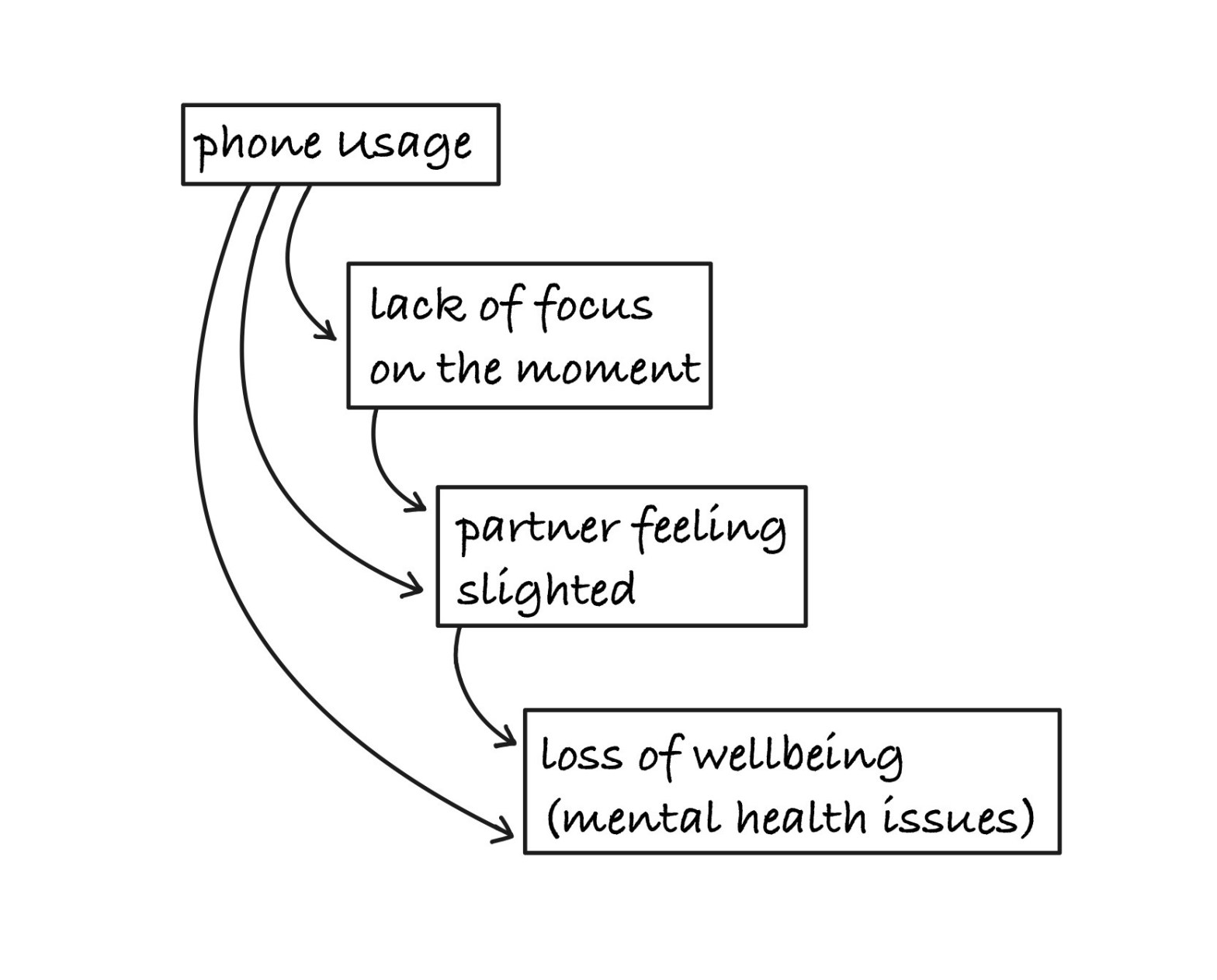
  • Technoference – “Technoference refers to the interruptions in interpersonal communication caused by attention paid to personal technological devices. In other words, it’s that thing where you’re looking at your phone or tablet and don’t hear the question your kid or your friend or your mom or your boyfriend asked you.”

In light of the recent increases in tech in all of our lives (everything from Zoom meetings to nonstop Slack/Jabber messages), it’s time to think about the ways that Tech influences our lives.

About six years ago, Technoference was coined by Brandon T. McDaniel. Both McDaniel and Sarah M. Coyne wrote a paper titled, “‘Technoference’: The Interference of Technology in Couple Relationships and Implications for Women’s Personal and Relational Well-Being.”

Since this paper’s publication, the term exploded in popularity.

I have been interested in the concept of Technoference for the past few years because I am fascinated by the function that technology plays in my life.

Unlike a lot of people who write about technology as less than ideal, I am not wishing for the good old days of my youth. I’m living them. As of writing this, I’m 22 and have grown up with Tech all around me.

Three Steps to analyze technoference:

  1. Tech: the Good, the Bad, and the Tool
  2. Agency Abolition
  3. Does Tech Control us?
Photo by ThisIsEngineering on Pexels.com

Tech: the Good, the Bad, and the Tool

There’s a lot of debate over whether Tech is “good” or “bad.” For a long time, I was in the camp of people that believed it was just “bad,” but I realized that this was a brash and thoughtless view. More recently, I’ve concluded that Tech is neither good nor bad, rather it’s a tool. Tools can do great things, and they can be corrupted for some quite terrible things.

Let’s be clear, Tech isn’t new. The TV was viewed as a negative distraction by some since its introduction into households in the 1930s.

Today, its popular to speak about how “technology has corrupted our youth.” Yesterday, it was, Rap, before that Rock and Roll, and before that the dreaded electric guitar. If we went back far enough, we could probably find people who said that the typewriter would ruin people’s handwriting, that the bike would ruin people’s legs, and that the boat would keep people from learning to swim.

To show how much people will catastrophize Tech, here are two real headlines:

  • “5 Reasons Why Technology Is Ruining Our Society”
  • “9 subtle ways technology is making humanity worse”

Articles like these might bring up some good points, but they screw up in a monumental way. They act as if young people are vice-grubbing robots. They take away our agency.

Agency Abolition

I don’t know about you, my dear reader, but I absolutely hate when people tell me that something isn’t in my control. Admittedly, I’m a bit of a control freak … okay a lot of a control freak. However, I’m not alone when it comes to the idea that I am in control of my life.

Photo by Efnan Yu0131lmaz on Pexels.com

My basic argument rests on the premise that we want to live a life of fulfillment I know I’m getting a little out there, just hang tight. Operating on this premise, we want to use the tools at our disposal to help us reach this fulfillment. This fulfillment or whatever you want to call it can be anything you want. I would argue, though, that a part of this idyllic life is to have the freedom to make your own choices.

This would mean that you would want to control the different factors in your life. Control the amount of alcohol you consume, the amount of sleep you get, how you treat those around you, etc., etc. This control should also include the way that you use Tech. Without this control, Tech uses you.

Does Tech Control us?

A large part of McDaniel’s 2016 paper focused on the fact that if we are constantly distracted by our phones when interacting with those closest to us, we start to feel less satisfied with those relationships. The study points out that “the majority (62%) of participants reported that technology interfered in their couple leisure time at least once a day.” Those that reported higher levels of perceived interruptions “tended to show worse overall well-being (lower relationship satisfaction, greater depressive symptoms, and lower life satisfaction).”

To bring this into focus, here’s that new term defined again:

  • Phubbing – “[The] practice of ignoring one’s companion or companions in order to pay attention to one’s phone or other mobile device.”

Because we can agree that most people don’t enjoy phubbing their significant other, it would be safe to say that these perceived interruptions are Tech intruding on life and not Tech bettering life. Just like we would consider it a problem, if alcohol were to lead to perceived interruptions in our relationships, we should also view Tech in the same light. Alcohol is a tool for enjoying an evening or becoming more social. Tech is a tool for connecting with others, and taking away menial tasks, nothing more.

There are many aspects of life that might benefit from a deeper look at technoference. None, I would argue, are more important than our relationships.

As such, I would break down my argument into three key points,

  • Tech is not good or bad it’s a tool.
  • Tech is beneficial only when helping us and not when its controlling us.
  • We can’t let Tech damage our relationships (Don’t Phub your friends).

These ideas have been backed up by a lot of research. Since this initial Technoference study, research has focused on parents, friends, relationship quality, and the role that Tech plays in our evolutionary lives.

  • “Technoference: Parent Distraction with Technology and Associations with Child Behavior Problems”
  • “Smartphones and Close Relationships: The Case for an Evolutionary Mismatch”
  • “Technoference: Parent Distraction With Technology and Associations With Child Behavior Problems”
  • “Daily technoference, technology use during couple leisure time, and relationship quality”
Photo by Alex Green on Pexels.com

Conclusions

I don’t view technology nearly as positively as many people my age, but I find that it hasn’t corrupted me, made me worse, or obliterated my society. The key takeaway is that there are many benefits, but also real risks.

These benefits include: the ability to video chat with friends over a beer while you draft your fantasy football league across the country, the connection to your partner via text whenever you want, the ability to like a friends post from Greece. The list goes on.

Many issues are caused by or exacerbated with Tech, especially smartphones and tablets. Again, the problem is choice and agency. If nothing else comes across from this post take this:

Use Tech, Don’t Let it Use You.

And please, walk up to a random stranger today, and ask them not to Phub their friends it’ll make me smile.

The Invisible Pandemic (Part II)

A dive into Generalized Anxiety Disorder (GAD) and Major Depressive Disorder (MDD) during and after the COVID-19 Pandemic.

“We need a refuge even though we may never go there. I may never in my life get to Alaska, for example, but I am grateful that it’s there. We need the possibility of escape as surely as we need hope…” – Edward Abbey, Desert Solitaire.

To avoid “burying the lede” as the journalists say, people afflicted with – or those at risk of – MDD and GAD faired quite poorly during the pandemic. People afflicted with MDD and GAD are also a great lens with which to analyze the problems that COVID-19 brought to light.

I am discussing MDD and GAD together because they often go hand-in-hand and in some situations can be treated in similar ways. When looking into GAD and MDD it is important to recognize that they are diagnosed disorders. This also means that they have very specific criteria that must be met. In many of the studies that I will be referring to, there are self-reporting questionnaires used to see if people meet the different criteria for GAD or MDD.

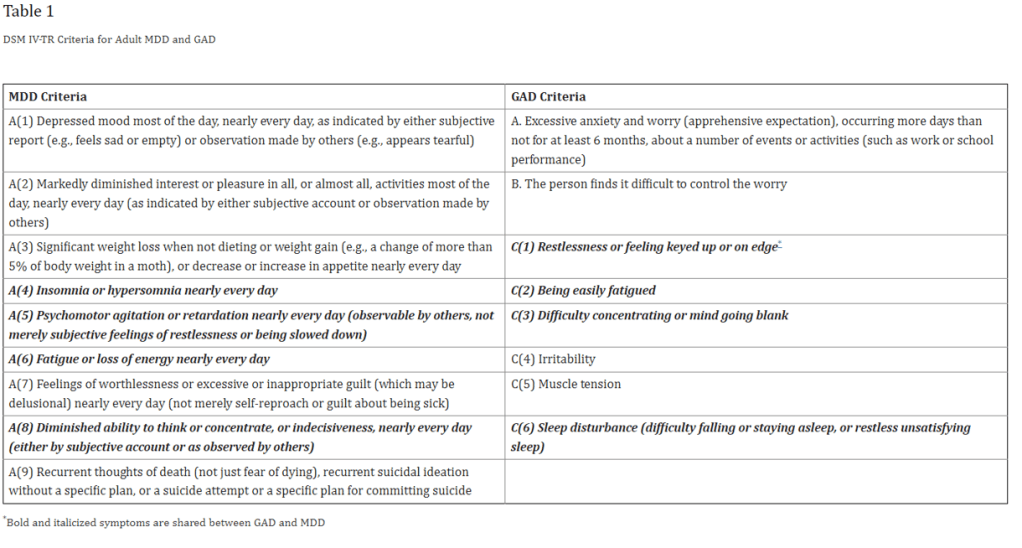
Without knowledge of the criteria for GAD and MDD it is hard to use them as a viewfinder for other mental health issues. Below is a list of criteria for each, their shared characteristics are italicized (Zbozinek et al.):  

Citation:   Zbozinek, Rose, R. D., Wolitzky-Taylor, K. B., Sherbourne, C., Sullivan, G., Stein, M. B., Roy-Byrne, P. P., & Craske, M. G. (2012). DIAGNOSTIC OVERLAP OF GENERALIZED ANXIETY DISORDER AND MAJOR DEPRESSIVE DISORDER IN A PRIMARY CARE SAMPLE. Depression and Anxiety, 29(12), 1065–1071.

While MDD and GAD cannot be further simplified without losing something, and at the risk of showing my hubris, I think it can be likened to the quote at the beginning of this post. Meaning that, MDD is like an overall loss of hope, while GAD is like an overall loss of the possibility of escape.

When thought of in these terms of hope and escape, It makes perfect sense that the Coronavirus Pandemic caused problems for those afflicted – or those to be afflicted – with MDD or GAD symptoms. The COVID-19 Pandemic caused many of us to lose hope after it seemed to get a weekly extension, while simultaneously worsening for over two years. The possibility of escape also seemed rather unattainable, as the pandemic raged across the globe, and its effects were felt everywhere. These effects were felt in both the real and virtual worlds. A person couldn’t so much as go onto their phone without seeing a barrage of doomsday information on COVID-19.  

*****

Here, I am going to dive into the weeds of the studies about the Coronavirus Pandemic and MDD/GAD, f you are interested in skipping this part, you can jump to the “*****” below.

The effects of the COVID-19 Pandemic on people who had, or were predisposed to having, MDD or GAD can be analyzed in two distinct ways. The first is looking at the effects that COVID-19 had on people who caught it, while the second is analyzing the effect that the overall pandemic had on people.

First, Monistrol-Mula et al. wrote a paper titled, The impact of COVID‑related perceived stress and social support on generalized anxiety and major depressive disorders: moderating effects of pre‑pandemic mental disorders. In this paper, the authors break down the different potential causes for increases in GAD and MDD. I will avoid boring you with all of the details, but they did a great job of mitigating things that would call the legitimacy of the study into question. As is the case in all my posts, you can view the methods for yourself by following the citation at the bottom of this post.

Monistrol-Mula et al. broke up the data into many different categories and found that people with a positive infection status were more likely to screen positive for MDD or GAD. The positivity rate for GAD without COVID-19 was 10.83%, while the positivity rate for GAD with COVID-19 was 13.62%. Similarly, the positivity rate for MDD without COVID-19 was 11.14%, while the positivity rate with COVID-19 was 15.41%. Interestingly, for the combination of MDD and GAD the percentages were 6.72% (without COVID-19) and 3.34% (with COVID-19).  I believe that this comes from an exceedingly low sample size of n=242 with both GAD and MDD, as opposed to n=395 and n=407 respectively.

As a quick little aside, while this matches with intuition for an illness making one’s anxiety or depression worse, I would be quick to point out that these values are not large enough to be considered statistically significant. As such, we should definitely have more retrospective studies in this era following the Coronavirus Pandemic.

The public anxiety and lack of a cohesive social network has impacted all people regardless of whether they had COVID-19 or not. For people without a history of mental illness, GAD and MDD jumped approximately 5.59% and 5.87% respectively (Monistrol-Mula et al.). This is nuts, especially if you extrapolate it to the rest of the population.

A study conducted by Aboul-ata et al in Egypt further analyzed the correlation between the effects of COVID-19 and MDD/GAD. This study used the Patient Health Questionnaire (PHQ-9) to assess MDD, and the Generalized Anxiety Disorder-7 (GAD-7) to assess GAD. The study had 7015 participants and resulted in statistically significant results for four of five expected factors. The four factors were Anxiousness, Social Support, Avoiding/Cleaning, and Medical Concern. The study did not find correlation for Deppresivity. This means that the data from the first study, which was conducted in Spain, is supported from a different study – with slightly different methods – in Egypt.

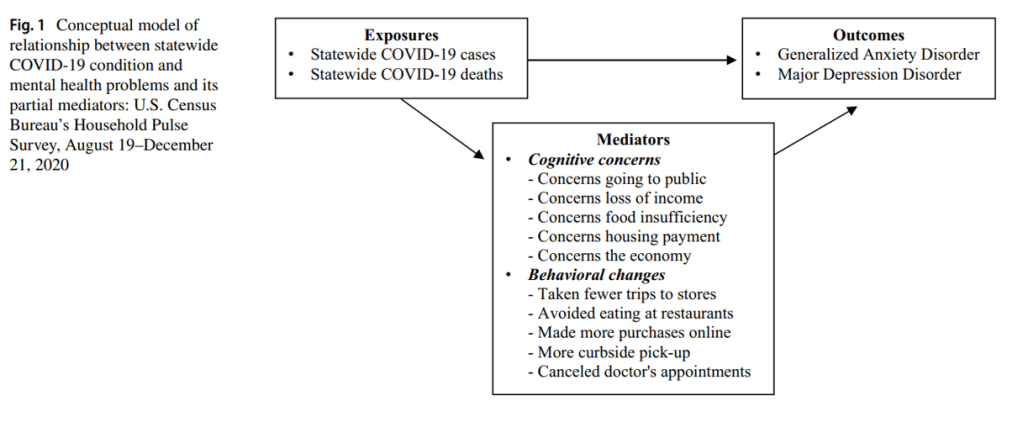
After looking at Spain and Egypt, let us look at a study that was conducted in the good old US of A; COVID‑19 pandemic and mental health problems of adults in United States: mediating roles of cognitive concerns and behavioral changes. In a previous study conducted in China, it was established that having a strong social network correlated with lower risk of GAD and MDD (Z. Ma et al.). This study used this information and conducted a large statistical analysis of all 50 states. The study used the COVID-19 infection numbers, as well as the Household Pulse Survey (HPS). The HPS was taken in three 3 to 4 month phases that were all recorded in 2020. The results of this study further corroborated the results of the studies in Spain, China, and Egypt, and can be visualized in the excellent diagram that was “Figure 1” in the paper (JungHo Park et al.):

*****

Citation: Park, Choi, J., & Kim, B. (2022). COVID-19 pandemic and mental health problems of adults in United States: mediating roles of cognitive concerns and behavioral changes. Social Psychiatry and Psychiatric Epidemiology, 57(8), 1557–1570. https://doi.org/10.1007/s00127-022-02265-3

So, what does all this mean for us?

The Coronavirus Pandemic resulted in increased anxiety and depression for individual people. The results were worse if a person had any history of mental illness, or actually contracted COVID-19. Similarly, if a person had a poor social network they were at further risk.

I also want to hammer home that these studies were looking at GAD and MDD, meaning that they were not looking at people who just had a rough time during the COVID-19 pandemic. For every person with MDD or GAD there were many more who were anxious and depressed to a less clinical level, and that cannot be discounted.

When we see these increases in mental illness it’s time to look at the system that’s causing it and not just the people getting sick. Just like in traditional medicine, it is better to be proactive than reactive.

Again, for people with no history of mental illness, rates of GAD and MDD jumped approximately 5.59% and 5.87% respectively. This doesn’t happen overnight in a stable society. This jump of almost 6% was for a diagnosable disease, imagine the people who didn’t have a diagnosable jump in depression or anxiety but a drastic one, nevertheless.

This research really goes to show that we are not living in a society that is ready to cope with largescale challenges (pandemics, climate disasters, technological advances, etc., etc.). Many of the ill-effects of the pandemic, were a result of panic portrayed by the media as well as our social networks, which are much further reaching than they once were – I discussed this in The Invisible Pandemic (Part I).

It would not be catastrophizing to say that the problems that caused a drastic increase in MDD and GAD during the COVID-19 area are not going anywhere, even as the Coronavirus Pandemic comes to an end.

MDD and GAD provide us a great quantifiable lens with which to analyze the truly awful effects that COVID-19 brought to light. Going forward, we need to take a long, deep look at our support systems, our news sources, and our social media.

In my next post, I am going to continue with some of the steps that we can take to reduce the effects that were felt during the Pandemic. I see very little value in bringing problems to light without analyzing their potential solutions. As such, I will be looking at everything from startups doing great work, to charities making a difference, too little day-to-day steps that we all can take.

In the meantime, however, I would posit to you that our oh-so-precious news networks and social media apps are taking away the refuge that we once enjoyed in our close support networks. Without this refuge, I leave you with the words of Edward Abbey:

“We need a refuge even though we may never go there. I may never in my life get to Alaska, for example, but I am grateful that it’s there. We need the possibility of escape as surely as we need hope…” – Edward Abbey, Desert Solitaire.

Citations

Aboul-ata, & Qonsua, F. T. (2021). The 5-factor model of psychological response to COVID-19: its correlation with anxiety and depression. Current Psychology (New Brunswick, N.J.), 41(1), 516–528. https://doi.org/10.1007/s12144-021-01701-y

  Li, Cao, H., Leung, D. Y. P., & Mak, Y. W. (2020). The Psychological Impacts of a COVID-19 Outbreak on College Students in China: A Longitudinal Study. International Journal of Environmental Research and Public Health, 17(11), 3933. https://doi.org/10.3390/ijerph17113933

Ma, Zhao, J., Li, Y., Chen, D., Wang, T., Zhang, Z., Chen, Z., Yu, Q., Jiang, J., Fan, F., & Liu, X. (2020). Mental health problems and correlates among 746 217 college students during the coronavirus disease 2019 outbreak in China. Epidemiology and Psychiatric Sciences, 29, e181–e181. https://doi.org/10.1017/S2045796020000931

Monistrol-Mula, Félez-Nobrega, M., Domènech-Abella, J., Mortier, P., Cristóbal-Narváez, P., Vilagut Saiz, Gemma, 1975, Olaya, B., Ferrer, M., Gabarrell-Pascuet, A., Alonso Caballero, J., & Haro Abad, J. M. (2022). The impact of COVID-related perceived stress and social support on generalized anxiety and major depressive disorders: moderating effects of pre-pandemic mental disorders. https://doi.org/10.1186/s12991-022-00385-3

Park, Choi, J., & Kim, B. (2022). COVID-19 pandemic and mental health problems of adults in United States: mediating roles of cognitive concerns and behavioral changes. Social Psychiatry and Psychiatric Epidemiology, 57(8), 1557–1570. https://doi.org/10.1007/s00127-022-02265-3

Wang, Pan, R., Wan, X., Tan, Y., Xu, L., Ho, C. S., & Ho, R. C. (2020). Immediate Psychological Responses and Associated Factors during the Initial Stage of the 2019 Coronavirus Disease (COVID-19) Epidemic among the General Population in China. International Journal of Environmental Research and Public Health, 17(5), 1729. https://doi.org/10.3390/ijerph17051729

Zbozinek, Rose, R. D., Wolitzky-Taylor, K. B., Sherbourne, C., Sullivan, G., Stein, M. B., Roy-Byrne, P. P., & Craske, M. G. (2012). DIAGNOSTIC OVERLAP OF GENERALIZED ANXIETY DISORDER AND MAJOR DEPRESSIVE DISORDER IN A PRIMARY CARE SAMPLE. Depression and Anxiety, 29(12), 1065–1071. https://doi.org/10.1002/da.22026

The Invisible Pandemic (Part I)

The next series of posts that I am going to be writing are going to cover the Invisible Pandemic. That is, the mental health crisis that this country is facing. The “First” pandemic of 2020, the COVID-19 pandemic wrought some real havoc on the country, with most estimates putting the US death toll over 1 million people. And whichever way that one spins it, that’s too many people. Without many of the precautions that we took to curb the pandemic, there would have almost certainly been more casualties.

This other pandemic, the Invisible Pandemic, is a more artificial pandemic. It is the pandemic of mental illness that has spread just as quickly and effectively as COVID-19. The key difference is that it’s not viral, It’s a culmination of years of technology outpacing our human hardwiring.

We didn’t evolve to live in cities with computers designed to take our attention and hold it for as long as possible. We didn’t evolve to live in a world where we went from bed to an 8+ hour shift, then out to a bar with only two days reprieve on the weekends (if we’re lucky). We didn’t evolve to have to regulate our own coping mechanisms (alcohol, cannabis, TV, browsing, social media, etc., etc.). But the nail in the coffin for so many people is that we didn’t evolve to isolate and live without seeing other people for such a long period of time.

In my last post, I talked about how many feedback loops for sharing and building close relationships are highjacked by social media. This stems from the fact that evolution takes years and years to really take hold because it most often works by favoring sexual reproduction of the most “fit.” This happens over the spans of generations. Most of our technological advancements have occurred over the last 300 years (The First Industrial Revolution started in 1760). This means that we are less than 5 generations from the beginnings of modern manufacturing practices, let alone technology like computers.

So, if I may be so bold, my dear reader, why the fuck is it reasonable to “fit” into this current world?

With this question providing a bit of context, let’s look at the Invisible Pandemic. Regardless of all of the lives saved by staying home and isolating, there have been some major mental health consequences. These consequences come from two primary places. First, the fear of getting COVID-19, along with the constant barrage of media about the havoc that it was reeking was very detrimental to mental health. Second, the lack of a support network, and generalized societal anxiety was also very damaging to individuals’ mental health. This second point came to a head during COVID-19 and its isolation, but it has been building for years.   

The first consequence has been analyzed in depth by others, with deep dives into doom scrolling and the fact that people who had higher levels of anxiety and depression were more likely to be hospitalized with COVID-19. I find the second consequence more interesting, as it has longer-term implications.

The lack of support network and generalized societal anxiety is still very much around and it still plays a huge role in our lives. This will impact the world going forward as it has had the most drastic impact on younger people. In an article written for the Journal of the American Medical Association (JAMA), they explain that “[increased] rates of substance use disorders and psychotic disorders occurred early and were sustained at levels higher than expected … The largest increases were noted for mood and anxiety disorders (74.7%), psychosis (73.2%), substance use (83.6%), social problems (64.6%), and neurodevelopmental disorders (69.8%).” (Benton et al.) The article is situated in the context of COVID-19 and the isolation that occurred. It goes to show that these increases in mental health issues during COVID-19 were not trivial and are not short-term.

This is not something that we can overlook anymore. While there are many parallels with the COVID-19 Pandemic, it’s important to note that these issues are coming from a deeper problem than COVID-19. In the next few posts, I will be diving into these different problems and some different ways to address them.

The next post will specifically focus on Generalized Anxiety Disorder and Major Depressive Disorder, and their relative upticks during and pre-COVID-19. I’ll also dive into the causes and some of the ways that we can combat them.  

Citations

Benton, Njoroge, W. F. M., & Ng, W. Y. K. (2022). Sounding the Alarm for Children’s Mental Health During the COVID-19 Pandemic. JAMA Pediatrics, 176(4), e216295–e216295. https://doi.org/10.1001/jamapediatrics.2021.6295

Holman, Thompson, R. R., Garfin, D. R., & Silver, R. C. (2020). The unfolding COVID-19 pandemic: A probability-based, nationally representative study of mental health in the United States. Science Advances, 6(42). https://doi.org/10.1126/sciadv.abd5390

Monistrol-Mula, Félez-Nobrega, M., Domènech-Abella, J., Mortier, P., Cristóbal-Narváez, P., Vilagut Saiz, Gemma, 1975, Olaya, B., Ferrer, M., Gabarrell-Pascuet, A., Alonso Caballero, J., & Haro Abad, J. M. (2022). The impact of COVID-related perceived stress and social support on generalized anxiety and major depressive disorders: moderating effects of pre-pandemic mental disorders. https://doi.org/10.1186/s12991-022-00385-3

Oldham, Hitchins, A., & Nickels, M. W. (2021). Mental Health, COVID-19, and the Invisible Pandemic on the Horizon. Mayo Clinic Proceedings, 96(2), 287. https://doi.org/10.1016/j-mayocp.2020.11.001

Was My Partner/Friend/Family Member Right About Picking My Phone Over Them?

A review of Smartphones and Close Relationships: The Case for an Evolutionary Mismatch

The short answer is sort of. It is more a matter of them feeling that you’re picking your phone over them when you think you’re just splitting your time.

I’ve been thinking about this question for a long time. Regularly wondering how I waste so much time after scrolling on any number of apps or websites on my phone. Then I feel guilty about how I could have spent that time with my girlfriend or close friend, etc., etc.

I’ve tried many tricks from deleting the Instagram and Facebook apps to setting “times” when smartphone use is acceptable. There were two massive flaws with this plan:

  1. I can go to my chrome app (which has all my passwords saved) and go to Instagram.com or Facebook.com.
  2. Personally controlling my screentime has a major point of failure. The person (me).

So What is the Best Solution?

To answer that, we need to really understand the nuances of why we love our phones so much….

A researcher that I had the pleasure of meeting at the University of Arizona, David A. Sbarra, PhD, did a great study with his colleagues on the way that smartphones impact our interpersonal relationships. The study is Smartphones and Close Relationships: The Case for an Evolutionary Mismatch. The study was written by David A. Sbarra, Julia L. Briskin, and Richard B. Slatcher.

This study, like most research, builds on previous work. I am not going to dive into all of these awesome studies. Though I have cited this paper at the end of this post, and it does a great job of supporting and explaining all of the previous work that it has built upon.

Let’s dive into some key points that the paper has built upon:

  • Attachment Theory: A middle-level evolutionary theory that addresses interpersonal relationships. Specifically, people bond with each other to increase their evolutionary fitness. This bonding is done through both disclosures and responses to those disclosures. In other words, people, evolving in smaller kinship groups, would be more fit (and therefore able to reproduce) by bonding with other members of their kinship groups.
    • Middle-level Evolutionary Theory: A theory of evolutionary psychology. It refers to a specific type of evolutionary theory that focuses on a particular area of functioning.
  • Technoference: This simply put, the different ways that a smartphone interrupts normal daily social interactions.
  • Evolutionary Mismatch: Defined as, “situations in which human adaptations that emerged to foster reproductive and inclusive fitness in ancestral environments become maladaptive in novel contexts that may differentially cue the same adaptations.”

Before I dive into the research, I want to put a little disclaimer: A lot of the points that I am going to lay out will sound like an indictment of technology. And while there are definitely some things that desperately need to change, technology is here to stay. Not only is it here to stay, but it is going to continue to have more and more of an effect on peoples’ lives.

That being said, the question is not to have technology or not? The question is, how do we use technology and not let it use us?

Breakdown of Smartphones and Close Relationships: The Case for an Evolutionary Mismatch.

The authors of this paper begin by putting their research into context. First, it’s stated that 77% of Americans, as of 2018, interact on social networking sites (Smith & Anderson, 2018). Today, that number has jumped to at least 81%. This effectively explains why this research matters in the context of the average person.

After this, and more, contextualization, the authors describe their goal to examine the possible evolutionary mismatch between smartphones and humans. The mismatch is predicated on Attachment Theory. This theory explains that people are predisposed to share and bond with their kinship groups and, therefore would want to do that as much as possible. The mismatch occurs when people begin to damage closer relationships. We are programmed to want to share more so that we strengthen our relationships with those closest to us. Achieving validation from sharing with those less close to us at the expense of those closest to us is problematic. It results in the very programming that developed to help close relationships doing the opposite.

Now, the study dives into how this mismatch can have a negative impact on relationships. The researchers describe the way that this predisposition to share and receive a response can impact a relationship. In much more elegant words, they essentially say that people in close relationships often feel that their partner is choosing their phones over them. Put another way, one or both partners is choosing to share and receive responses from the edges of their social networks, as opposed to the more integral parts.

At this point the study dives into some pretty scary statistics:

  • Out of over 2000 adult couples in the US, 1/4th reported that their partner was distracted by their phone while spending time with the other (Lenhart & Duggan, 2014).
    • Increasing to 2/5ths when constrained to 18–29-year-olds.
  • Another study found that 70% of women claimed that smartphones negatively impacted their relationships (McDaniel & Coyne, 2016, p. 7).

It’s important to note that the study did qualify these statistics, saying that divided attention was nothing new. Even sighting the example that “[it] is not hard to imagine someone becoming upset with his spouse’s incessant reading of the newspaper (or vice versa) while he is trying to explain the frustrations of his workday.”

With the general conflict established, the research goes into what we can really act on… WHY?

The first idea is that we need to dive into what’s called the Environment of Evolutionary Adaptiveness, or EEA. This means that to understand why we are drawn to share with others, we need to understand the environment that shaped us. To summarize the research, having a better ability to connect with others, especially those that a person wasn’t related to, allowed for both more child survival, and more adult survival.

A “[core] intimacy processes: self-disclosure and responsiveness” section follows the EEA section to connect these ideas to the modern world. In this section, the authors relate the ideas about the importance of intimacy to modern humans through the workings of speech. Importantly, somewhere between 30% and 40% of modern speech is used to tell someone about either personal experiences or other intimate relationships (Dunbar, Marriott, & Duncan, 1997; Emler, 1990, 1994; Landis & Burtt, 1924).  

In the following sections, the authors dive further into the weeds of the benefits of these self-disclosure and responsiveness benefits in the EEA. This includes everything from benefits in infant responsiveness to partner responsiveness later in life.

Social media used the desire for self-disclosure and responsiveness to incredible effectiveness. Whether by design or by sheer dumb luck, “more than 80% of social-media activity involves simply announcing or broadcasting one’s immediate experiences (Naaman, Boase, & Lai, 2010).” This means that we are hardwired to want to share on social media, as it preys on the desire for self-disclosure. And, if that wasn’t enough, the social media companies added a “like” button. This allows for the response that we are predisposed to want post-disclosure.

A person shares their feelings, then is rewarded with a positive response.

Hell, no wonder, we can’t get off our phones even when we try. It’s part of our code.


WHY does this susceptibility to smartphones damage our relationships?

Different ways that phones can interfere with mental health and relationships. Adapted from Sbarra, et. al. 2019.

In this case, the answer is technoference. Because a smartphone interrupts normal daily social interactions, it can often leave a rift between the phone user and the user on the other side of that social interaction.  Smartphones spilt a person’s attention, leading to this effect.  

With split attention, we cannot perceive the same number of unusual cues as we normally can (Hyman, Boss, Wise, McKenzie, & Caggiano, 2009). When we miss these social cues, we literally lose parts of the conversation. This is because much of a conversation is nonverbal. For example, in a study of 25 college students, it was shown that when students were involved in a conversation with someone who was using their smartphone, the person on the phone was perceived as less caring because they were less responsive. In that same study, students who were on the phone were less able to hear and focus on the conversation (Aagaard, 2016).

A quick aside: the use of a smartphone while not paying attention to your conversation partner has a term. Phubbing. Here’s a good article on the topic, by the Time.

It’s clear that smartphone usage damages the ability of two people to share and bond to the fullest. The authors then go on to further explain that, not only does the use of a cell phone damage bonding, but the “mere-presence” of a smartphone does the same.

Towards the end of the paper, the authors are clear to point out that, while the evidence above is relevant, far more research needs to be done. Especially, to answer: “Do people experience less intimacy in their current relationships than they did 10 or 20 years ago? Further, do people feel intimate and close to those with whom they are interacting online? To what extent does online context (e.g., public vs. private SNS posts vs. texting) matter in how close people feel to others online?”

How does this all tie together?

In the conclusion of this paper, the authors explain that there is a potential disconnect between the way that we are programmed and the modern world we live in. Referring to the disconnect between our desire to share and receive a response and modern technology.  They also further dive into the intimacy process in modern humans and how social media can hijack the process to produce technoference. Lastly, the authors reiterate the importance of further research in this area.

There is plenty of information that I did not go into because at a certain point I would just be rewriting the paper in my own words. And, while that would be a great exercise, I’ll save you, my dear reader, the arduous task of reading through it. If you would like to read more, please see the first citation for reference.

SO WHAT?

Alright, now that we have gotten this information, what can we do with it?

We understand that our brains are hardwired to want to share and receive feedback, and we know that this is best done with those closest to us. Doing this will help us preserve and strengthen those relationships.

A key takeaway is that we are not wrong for being drawn to our phones. It’s not a lack of self-control, but a biological program. This means that we need to hack the program. This can be done at a number of points within the process of our phones grabbing our attention away from our loved ones.

The most obvious, and the most effective, will be to simply have time with our loved ones, without our phones. Making this a routine will be incredibly beneficial. One way that this could look, is to say that every night when we sit down for dinner our phones go into a phone box lock. There is a number online that you can buy. A key benefit is that it takes the need for self-control away. As no one has paid me for a sponsorship, I have just linked the google shop page.

The next step that we can take is to be more self-aware. I know this sounds like some hippy-dippy shit but it really works. There are a number of ways to achieve it (I know I haven’t). The key is to notice when you pick up your phone. Rather than, having your phone be something that you constantly look at, set a reminder every hour to pop up on your phone, “Am I splitting my attention?” If the answer is “yes” put down the phone.

The last step that I will recommend is that we think about when we truly need our phones on us. If there is an emergency someone will call. As such why not leave the phone on the counter when having a conversation with your spouse, child, or other loved one. Emergencies really don’t come up that often, and if they do, why wouldn’t the truth work as a solution:

“Sorry I missed your call an hour ago, but I was having a conversation with my son. How can I help?”

If that script wouldn’t work, then there may be more than a cell phone interrupting your relationships.

Citations

Sbarra, Briskin, J. L., & Slatcher, R. B. (2019). Smartphones and Close Relationships: The Case for an Evolutionary Mismatch. Perspectives on Psychological Science14(4), 596–618. https://doi.org/10.1177/1745691619826535

Aagaard, J. (2016). Mobile devices, interaction, and distraction:
A qualitative exploration of absent presence.
Artificial Intelligence & Society, 31, 223–231. doi:10.1007/
s00146-015-0638-z

Dunbar, R. I. M., Marriott, A., & Duncan, N. D. C. (1997).
Human conversational behavior. Human Nature, 8, 231–doi:10.1007/BF02912493

Emler, N. (1990). A social psychology of reputation. European
Review of Social Psychology, 1, 171–193.


Emler, N. (1994). Gossip, reputation, and social adaptation.
In R. Goodman & A. Ben Ze’ev (Eds.), Good gossip (pp.
117–133). Lawrence: University Press of Kansas.

Hyman, I. E., Boss, S. M., Wise, B. M., McKenzie, K. E., &
Caggiano, J. M. (2009). Did you see the unicycling clown?
Inattentional blindness while walking and talking on a
cell phone. Applied Cognitive Psychology, 24, 597–607.
doi:10.1002/acp.1638

Landis, M. H., & Burtt, H. E. (1924). A study of conversations.
Journal of Comparative Psychology, 4, 81–89.

Lenhart, A., & Duggan, M. (2014). Couples, the internet, and
social media. Pew Research Center. Retrieved from http://
http://www.pewinternet.org/2014/02/11/couples-the-internetand-
social-media

McDaniel, B. T., & Coyne, S. M. (2016). “Technoference”: The
interference of technology in couple relationships and
implications for women’s personal and relational wellbeing.
Psychology of Popular Media Culture, 5, 85–98.

McDaniel, B. T., Galovan, A. M., Cravens, J. D., & Drouin,
M. (2018). “Technoference” and implications for mothers’
and fathers’ couple and coparenting relationship quality.
Computers in Human Behavior, 80, 303–313.

McDaniel, B. T., & Radesky, J. S. (2018). Technoference:
Parent distraction with technology and associations with
child behavior problems. Child Development, 89, 100–109.

Naaman, M., Boase, J., & Lai, C.-H. (2010). Is it really about
me? Message content in social awareness streams. In
Proceedings of the 2010 ACM Conference on Computer
Supported Cooperative Work (pp. 189–192). New York,
NY: Association for Computing Machinery.

Comming Soon

In this post, I am going to lay out what to expect from the website and blog going forward.

I plan to continue writing about the amazing achievements that science has made in the field of psychology and mental health.

Full Stop.

Using the research conducted every day by incredibly intelligent people to improve our own lives seems like a no-brainer. Beyond this, much of this research is publicly funded so we should reap the rewards as a society.

I have never met a scientist that was happy with the paywalls that most academic journals impose. In fact, most will grant you access to their work if you just email them. I plan to take advantage of this and explain the work in layman’s terms. I will also make sure to cite all of my sources in either APA or Chicago format to assure complete transparency with all of my research.

Keeping these things in mind, it will be my pleasure to post a rundown of interesting research and how it can affect the ways that we go about our lives. I will post once every 2 weeks on Friday, and I will write two different types of posts:

  1. A high-level overview of recent research done in a niche area, like “sleep and mental health.”
  2. A deep dive into the nuance of one paper or one author, similar to my Impacts of Interpersonal Relationships.

Lastly, it will be my mission to keep all of my writing interesting and relevant. This is engaging and fun for me, and I will work toward making it the same for all of my readers.

I’m really excited to start posting these, and -as a little teaser- my first post will be a deep dive into how technology can affect close interpersonal relationships.

Impacts of Interpersonal Relationships (4)

This is coming out a few weeks after I planned on getting it out. However, I’m just about all settled in Chicago now, and will hopefully have a much more regular posting schedule.  

In my last post, I talked about the roadblocks to reducing income inequality and making strides towards a more trusting society. I discussed how we could increase trust in our own lives.

In this post, I will talk about how institutions can aid in the transition to a more equitable and trusting society. I believe that there are two areas of focus where the most consequential changes can be made. The first area is research, without which we are just speculating on causes and effects. The second is governmental policy, which is an effective, if at times inefficient, tool.  

Institutional Action Potential

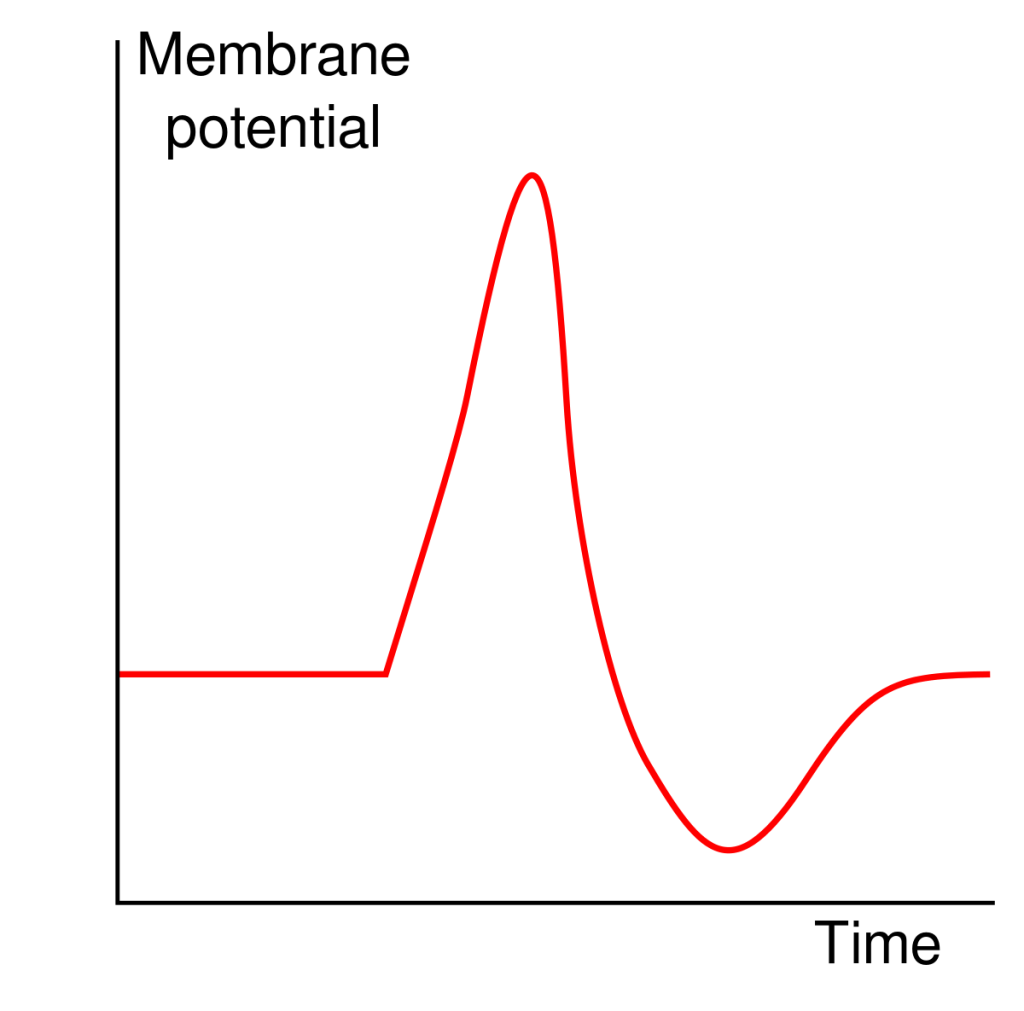
In Biology Action Potential is considered “A short-term change in the electrical potential on the surface of a cell (e.g., a nerve cell or muscle cell) in response to stimulation, [which] then leads to the transmission of an electrical impulse (nerve impulse) that travels across the cell membrane.”

Action Potential

To affect real change, we need to reach a peak in this sort of institutional action potential. In other words, we need to hit a critical mass to get the ball rolling. Research and governmental action must increase in volume and effectiveness. This is so that people both understand the importance of a more equitable and trusting society and so that people see that this is truly achievable.

The first way to get the ball rolling is through research. In the first three Impacts of Interpersonal Relationships posts, I have cited a myriad of different research materials. These studies are great; however, they have not been tested, thoroughly, in the real world. To add even more validity to the ideas in these papers, they need to be applied in real situations. To do this, the researchers themselves need funding in the form of grants. These can come from many sources, including non-profits, the government, and private companies.

One thing that all of these sources have in common is that they respond to public pressure. So, if people lobby for more research to be placed in the area of trust and income inequality, then it is far more likely to happen. Beyond calling for more funding, you can, given that you have the means, donate to organizations that will help to fund this research. There are a number of great places to donate, both on the large and small scale. If you find you are interested in one of the studies cited in a previous post, then by all means donate to a particular department at a particular university. The important aspect of donating is that the money is clearly given to the research that we are trying to promote.

The next area that will have a strong impact on getting the ball rolling is government. As I mentioned in the introduction, this is a wildly inefficient tool, but it is a powerful tool, nonetheless. Beyond that, it can be very effective. First, we can take advantage of its ability to fund the research mentioned above. The next way that we can use the government is to find specific programs that can help produce more equitable and trusting situations.

CALL TO ACTION

In writing this post, I attempted to find new research to further many of the ideas discussed in my last three posts. I realized that it’s not there to be found yet… So, this post is a call to action because the groundwork has been laid by previous research. Now, more research needs to be done, and at the same time, people need to start pushing for change. People need to see, hopefully through this research, that we ought to be in a more trusting society. As the world is ever-changing, I want to move in the direction of a more, not less, trusting society.

The research has shown that the way to this society is by decreasing income inequality, increasing perceived fairness, and increasing healthier interpersonal relationships.

I will have another post coming out shortly with my next series of blog posts.

Quote Citation:

https://www.biologyonline.com/dictionary/action-potential#:~:text=A%20short%2Dterm%20change%20in,travels%20across%20the%20cell%20membrane.

Impacts of Interpersonal Relationships (3)

Now we have covered the connections between trust, income inequality, and mental health. What do we do about it?

Well, the easy solution is to make more money and be more trusting…Right?

Yes, but I’d venture to say that everyone would do that if they could. There are two metaphorical roadblocks to this. The first is that it’s far easier to proclaim that we should reduce income inequality, and each make more money than it is to actually do. The second is that it’s hard enough to find ways to give and receive more trust, let alone find the people who deserve that trust.

These roadblocks aren’t trivial, in fact as we try to look past them it often looks like there is no road being blocked, just a dead-end.

The following will focus on what we can do to increase trust in our individual lives, the next post will discuss how to increase societal trust, as well as decrease income inequality.

Personal Implications of Value Assignment

Now that we have established the importance of increasing trust to increase our happiness in our own lives. We ought to answer the question of how?

A study run by Oishi, Diener, Suh, and Lucas focused on this issue. The study was called Value as a Moderator in SWB. The study was done as a daily diary study, and it operated on the previous research that people are happier in the long term when they are happier in the short term (i.e., it adds up). The study focused, not on if people were happy, but on why people were happy. It found that people who achieved what they valued were happier across the board, but that what people valued was different.

This means that if we want to be happier, we need to align our values and actions with what makes us happy. In other words, if we value work, we should put our time and effort into work. If we value sports, we should focus on sports, so on and so forth.

This relates to increasing trust because it will help us to focus. As we cannot increase trust in every part of our lives all at once, learning what we value gives us a place to focus. To use an example from the paper, “suppose Steve and Jim are equally satisfied with their lives, and on average they experience the same amounts of positive and negative emotions. However, Steve typically feels ecstatic when he beats his friends in racquetball, whereas Jim feels happy when he gets praised by friends.” We can move this idea to trust, Steve will feel happier if he feels that he can trust his partners to play their best in racquetball, while Jim will likely feel better if he can trust his friends as they compliment him (Oishi, 1999).

Of course, there is much more research to be done to connect these two ideas, but they work together logically. No one can tell you what it is that really makes you happy, but you can focus on those areas to increase important trust in your life, which can lead to a much more satisfying life.

There are many more directions to go with the research and a lot of papers discussing how to increase trust. These range from trust in a marriage to trust with your coworkers. At the end of the day, I will leave it to you to find and research where you feel you need to grow trust. What I hope to do is to illuminate why trust matters, and why there are certain aspects of your life where it matters more.

My next and final post in this series will focus on what governments can do and where research can help in the future. I also would love to hear, either in comments or in emails, what I can focus on next and what you would like to learn about in my next series of posts.

 Citations (if people would like to learn more about the above topics, they can use the following papers)

Diener, Oishi, S., & Lucas, R. E. (2003). Personality, Culture, and Subjective Well-being: Emotional and Cognitive Evaluations of Life. Annual Review of Psychology, 54(1), 403–425. https://doi.org/10.1146/annurev.psych.54.101601.145056

Dohmen, & Falk, A. (2011). Performance Pay and Multidimensional Sorting: Productivity, Preferences, and Gender. The American Economic Review, 101(2), 556–590. https://doi.org/10.1257/aer.101.2.556

Hagerty. (2000). Social comparisons of income in one’s community: Evidence from national surveys of income and happiness. Journal of Personality and Social Psychology, 78(4), 764–771. https://doi.org/10.1037//0022-3514.78.4.764

Oishi, Diener, E., Suh, E., & Lucas, R. E. (1999). Value as a Moderator in Subjective Well-Being. Journal of Personality, 67(1), 157–184. https://doi.org/10.1111/1467-6494.00051

Delay/Comming Soon

I appreciate everyone’s patience in this next post coming out, while I prepare for my move to Chicago, IL. I will have my next post coming out next week, and it will cover my favorite part of the Impacts of Interpersonal Relationships. Next week’s post will focus on personal ways to improve mental health outcomes related to trust and income inequality. Following that, I will cover further important research and governmental action to improve mental health outcomes.